



 Home
HomeDigital Amplifier vs Analog Amplifier: Which One Is Better?
 Jun 27,2026

 Shuoyi
When choosing a power amplifier, one question often comes up:
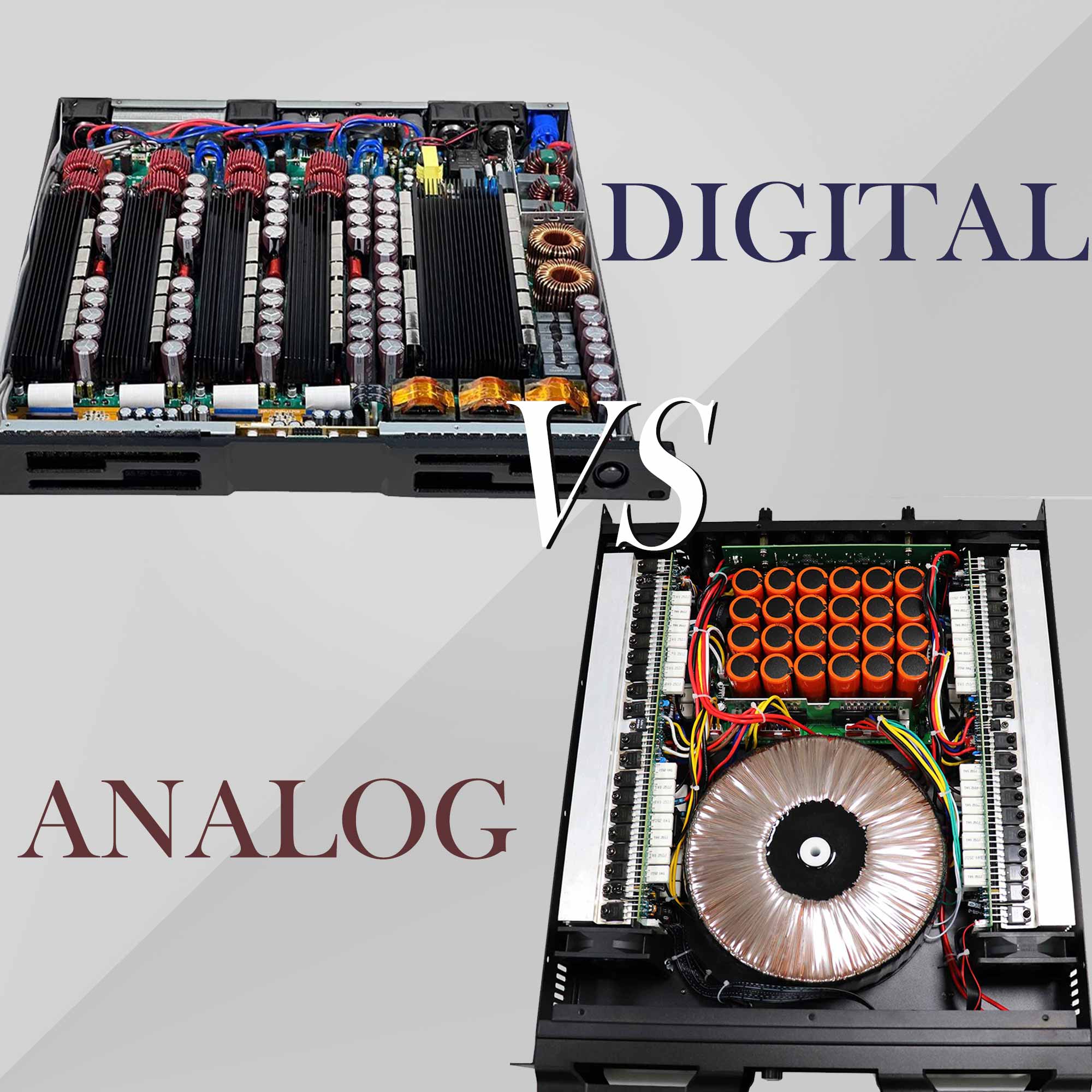
Should you choose a digital amplifier or an analog amplifier?
Both technologies are widely used in professional audio systems, from live sound and KTV installations to clubs, churches and commercial venues. While digital amplifiers have become increasingly popular in recent years, analog amplifiers still maintain a strong position in the market.
So what are the main differences?
Sound Quality
Sound quality is often the first factor people consider when selecting an amplifier.
Many audio professionals believe that analog amplifiers deliver a warmer and more natural sound. They are often praised for their smooth midrange, musical character and excellent dynamic performance.
Digital amplifiers, on the other hand, focus on efficiency and precision. Modern digital amplifier technology has improved significantly over the years, offering clear sound, low distortion and strong control over low frequencies.
For many applications, both technologies can provide excellent audio performance. The choice often depends on personal preference and the specific requirements of the sound system.
Reliability and Efficiency
Analog amplifiers have been used in professional audio for decades and are known for their proven stability. Their relatively simple circuit design makes them easier to service and maintain, which is one reason many users continue to trust them for demanding applications.
Digital amplifiers use more advanced technology and rely heavily on design quality. A well-engineered digital amplifier can offer excellent reliability, but its performance depends greatly on the quality of components and circuit design.
Where digital amplifiers clearly stand out is efficiency. They convert more electrical energy into audio output and generate much less heat. This reduces power consumption and helps improve overall system efficiency.
Weight and Portability
One of the biggest advantages of digital amplifiers is their compact size and lightweight design.
Because they operate more efficiently and require less cooling, digital amplifiers can deliver high output power while occupying less rack space and adding less weight to a system.
Analog amplifiers typically require larger power supplies and heat sinks, making them heavier and bulkier. For fixed installations this may not be a major concern, but for touring companies and mobile sound providers, weight reduction can be a significant advantage.
Which One Should You Choose?
There is no universal answer to the digital amplifier versus analog amplifier debate.
If you value a traditional sound character, proven stability and easy maintenance, an analog amplifier may be the right choice.
If you prioritize energy efficiency, lightweight equipment and high power density, a digital amplifier may better suit your needs.
Ultimately, the best amplifier depends on your application, budget and performance expectations.
Final Thoughts
Digital amplifiers and analog amplifiers both have important roles in today's professional audio industry.
Analog amplifiers continue to be appreciated for their natural sound and long-standing reliability, while digital amplifiers are increasingly favored for their efficiency, compact design and powerful performance.
Rather than asking which technology is better, it is often more useful to ask which technology is better suited to your specific project.
 Professional Power Amplifier Rear Panel Functions Explained | Shuoyi Audio
 You May Also Like


 Tel
Tel
 Email
Email
 Address
Floor 2, No.16, North 1st Road, Shuikou Avenue, Jinsha East, Danzao Town, Nanhai District, Foshan City, Guangdong Province.